

Illicit Trafficking of Cultural Heritage and Terrorism Financing: A Holistic Analysis of Operational Processes and Legal Gaps
The illicit trade of cultural property is not merely a loss of historical data but a sophisticated criminal enterprise that fuels global security threats. According to the June 2024 report by the United Nations Interregional Crime and Justice Research Institute (UNICRI), this phenomenon is intricately linked to the financing of terrorism and organized crime networks. This article examines the multi-layered structure of cultural heritage trafficking—from the point of looting in conflict zones to elite global markets—while identifying the institutional and legal vulnerabilities that facilitate these illegal flows.
Dr. Bilal Bilgili
7/17/2025
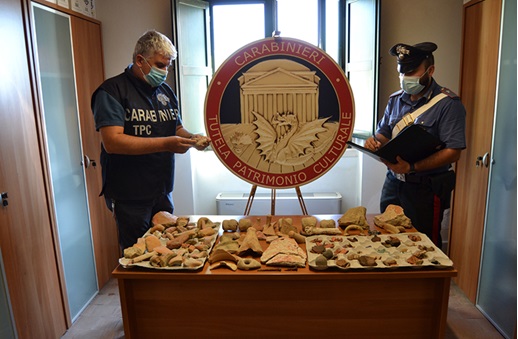
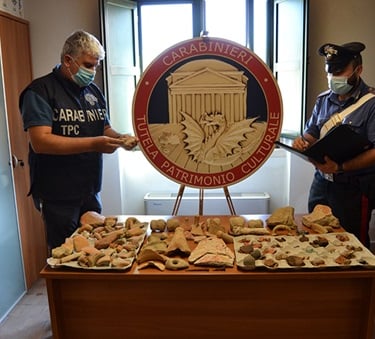
The Scale of Global Illicit Trade: Operation Pandora V
The magnitude of the threat to cultural heritage is evidenced by large-scale international law enforcement actions. Operation Pandora V, conducted between June 1 and October 31, 2020, exemplifies the extent of this criminal network. Involving customs and law enforcement from 31 countries, the operation resulted in the seizure of over 56,400 cultural artifacts and 67 arrests. These figures highlight that trafficking is a highly organized, transnational phenomenon rather than a series of isolated incidents.
The Nexus Between Trafficking and Terrorism Financing
Since the 1980s, trafficking networks have become increasingly institutionalized in conflict zones such as Iraq, Syria, and North Africa. These activities serve two primary strategic functions:
Operational Funding: The proceeds from illicit sales are used by terrorist groups to purchase weaponry, pay militant salaries, and fund general operations.
Symbolic and Political Control: Beyond financial gain, militant groups utilize the destruction and removal of identity symbols to exert political control over local populations.
Digital Monetization: Some looters even generate advertising revenue by uploading videos of the looting process to social media platforms.
The Supply Chain: A Typology of Actors
The journey of a trafficked object from the ground to a collection involves a complex hierarchy of actors:
Requesters: High-end collectors in wealthy and stable nations who drive the demand.
Looters: Often "subsistence diggers" or vulnerable local populations who extract items from archaeological sites. They typically bear the highest risk while receiving the lowest percentage of the final market value.
Brokers/Intermediaries: Strategic actors who purchase items from looters, establish smuggling routes, manage logistics, and may manufacture fraudulent documentation.
Facilitators: Individuals who enable the trade through negligence or corruption, including government employees, security guards, museum personnel, and customs or immigration officers.
Transit, "Cleaning," and Market Integration
As cultural objects move away from their source, their illicit origins become increasingly difficult to prove, entering what is known as the "Transit Phase":
The Grey Market: Artifacts undergo a "cleaning" process to be presented as legal products, effectively blurring the lines between legal and illegal trade.
Route Overlap: Smuggling routes for antiquities frequently overlap with existing pathways used for the trafficking of arms, drugs, and humans.
Acquisition: Buyers range from individual collectors (motivated by investment or decoration) to private and public museums. High-value items are often moved through specialized private dealers.
The Role of Auction Houses: These entities often act as intermediaries where objects are sold with minimal information and a lack of clear ownership history (provenance).
Institutional Obstacles and Regulatory Gaps
International law and governance mechanisms currently suffer from significant gaps that hinder effective enforcement:
Legislative Inconsistency: An object considered illegal in one country may be viewed as legal in another, and there is no international body with full authority to resolve these legal transfer disputes.
Technical Challenges: Customs and police officials often find it difficult to distinguish between legal and illegal items and frequently lack the specialized tools or expertise required to prosecute these crimes.
Lack of Specialization: The absence of dedicated "art and antiquity police" units in many countries suggests that governments do not always view cultural trafficking as a top priority.
Conclusion and Recommendations
Combating the illicit traffic of cultural property requires an integrated, multi-sectoral approach. It is essential to establish standardized cooperation mechanisms between source, transit, and destination countries. Key strategies should include:
Developing integrated platforms for continuous information sharing between governments, law enforcement, and cultural authorities.
Implementing innovative tools such as digital tracking systems and community-based awareness programs.
Increasing academic research into the specific links between antiquities crime and terrorism to better inform policy.
Addressing these vulnerabilities is a prerequisite for protecting global cultural heritage and disrupting the financial networks that sustain international conflict.